Organizational diagnostic See what is slowing the company down—before people simply learn to work around it.
The deadline is still met. The client still gets an answer. But more work depends on chasing, escalating and somebody quietly saving the day. Kamoto shows where that pressure is building, what is producing it and what leadership can change.
Explore the platform →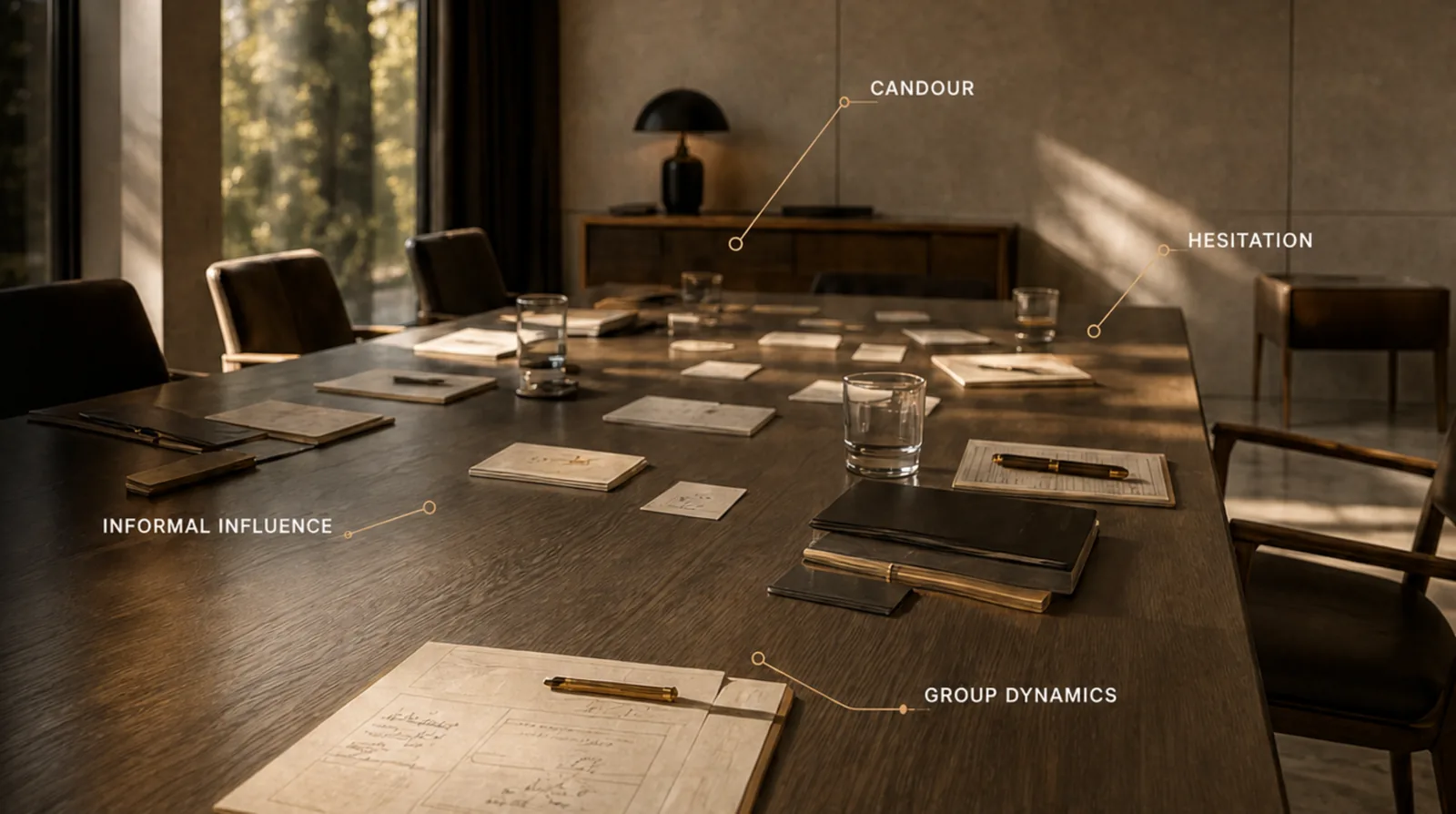
Four people working.
One on holiday.
Some things will have to wait.
Apparently.

See where work depends on someone stepping in.
01 — More than a survey
The tool captures the answers.
We read the room.
An online survey shows us where the same experience keeps returning. A diagnostic workshop lets us see what happens when people try to explain it together.
Everyone selects “decision-making needs improvement.” Useful—but not enough.
Why did the room suddenly go quiet when that particular example came up?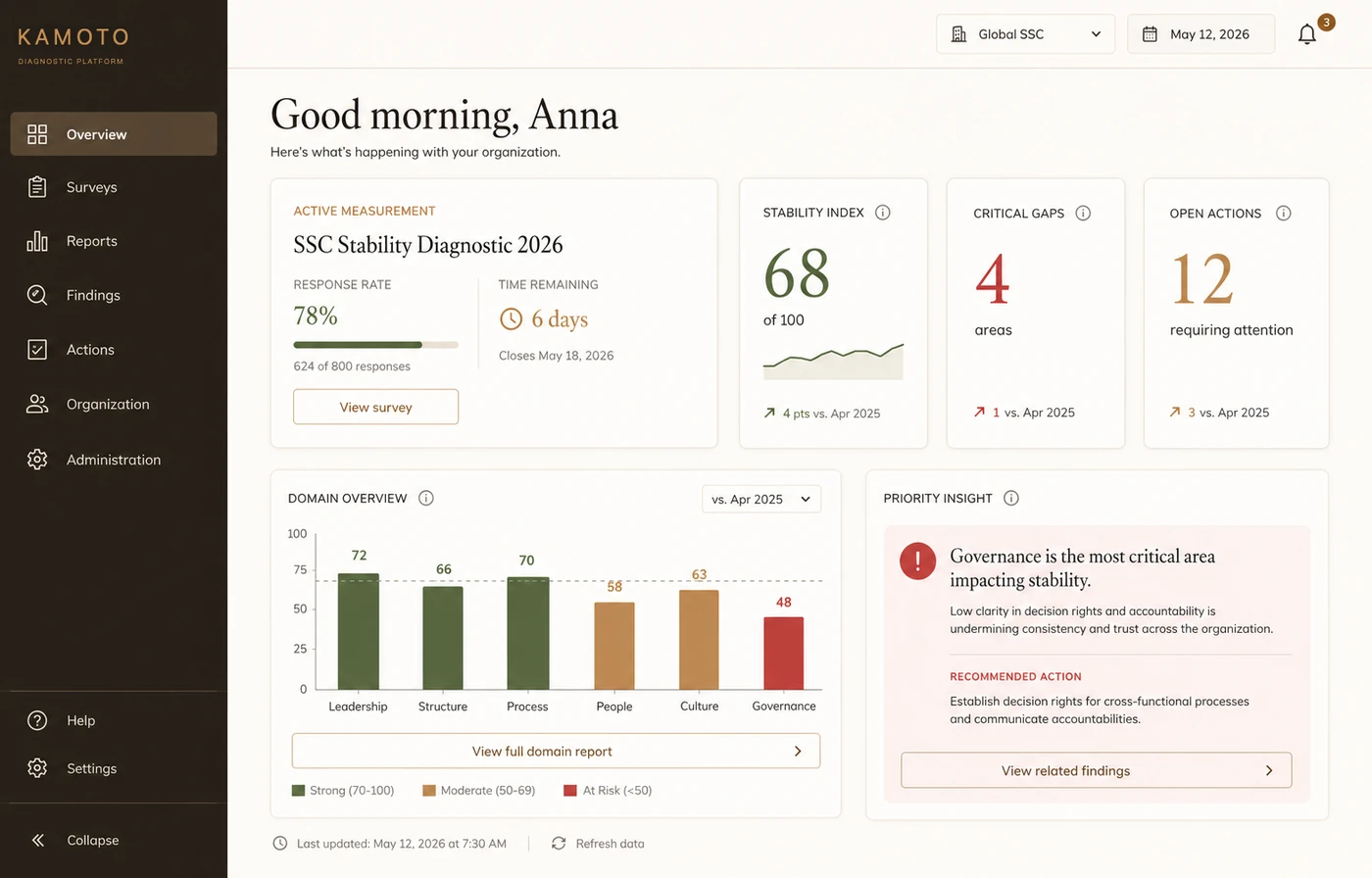
- Anonymous inputWhat people are willing to say when individual answers remain protected.
- Diagnostic workshopsWhat happens when people discuss real decisions, responsibilities and pressure together.
- Senior interpretationWhat we notice in the unfinished sentence, the careful wording and the example somebody almost gives.
This is not an ordinary workshop with better stationery. The survey shows us the pattern. The room shows us how the pattern stays alive.
02 — The same company. Different realities.
“We’re waiting for them.”
So are they.
Sales is waiting for Operations. Operations is waiting for Finance. Finance is waiting for someone to say who can approve it.
Everyone is busy. The customer is still waiting.
We compare what teams experience, then bring a real example into the room. Where did the work stop? Who could move it forward?
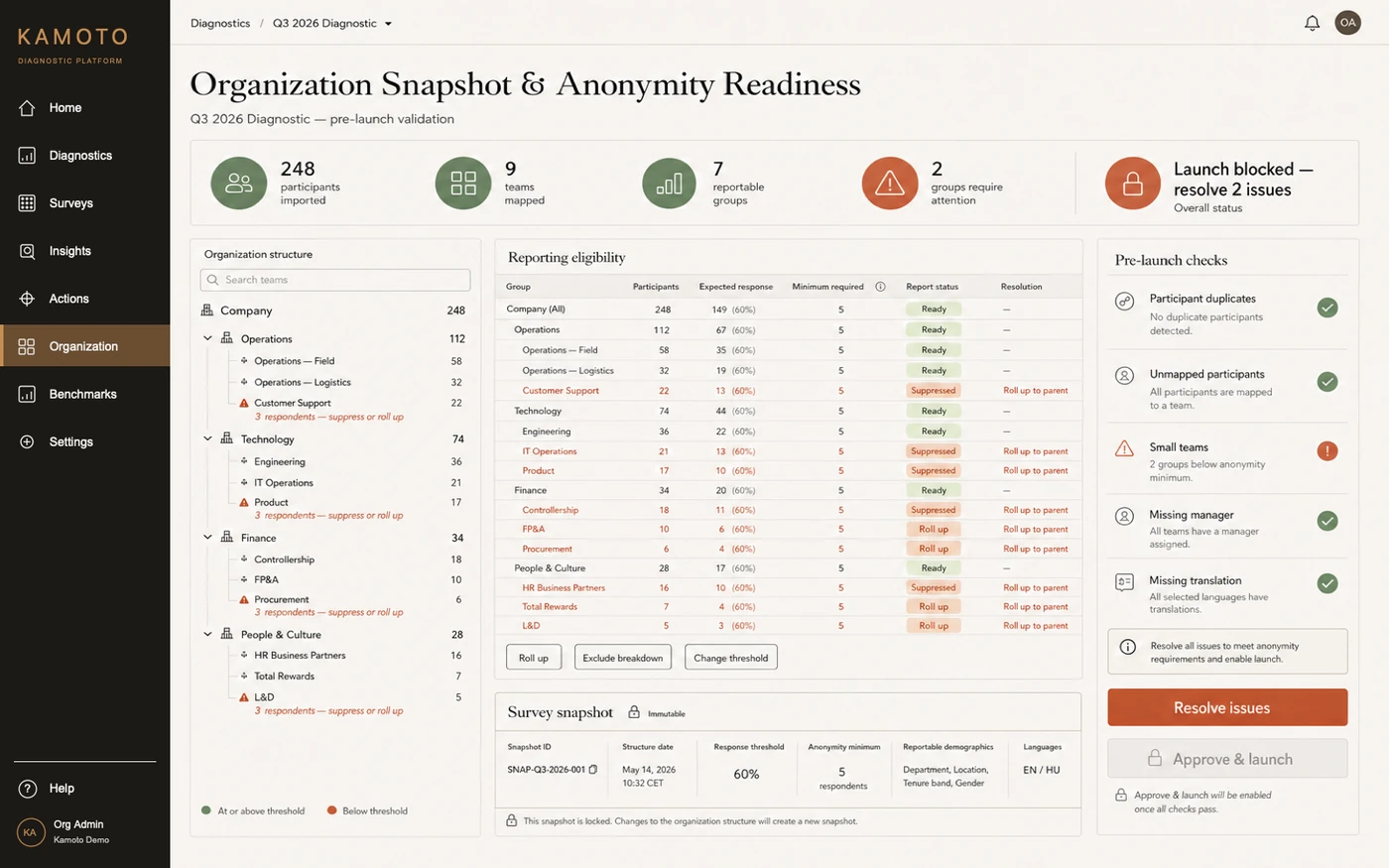
Start with the differences between teams.
Then follow the work that gets stuck between them.
03 — From finding to decision
A finding should come with a next step.
“Decision-making is slow” is an observation. “Remove one approval from these decisions, name the owner and review the result in six weeks” is something a company can act on.
- What is happening and where it appears
- A clear owner with authority to act
- A next step, timeline and expected result
- A leadership forum that keeps it moving
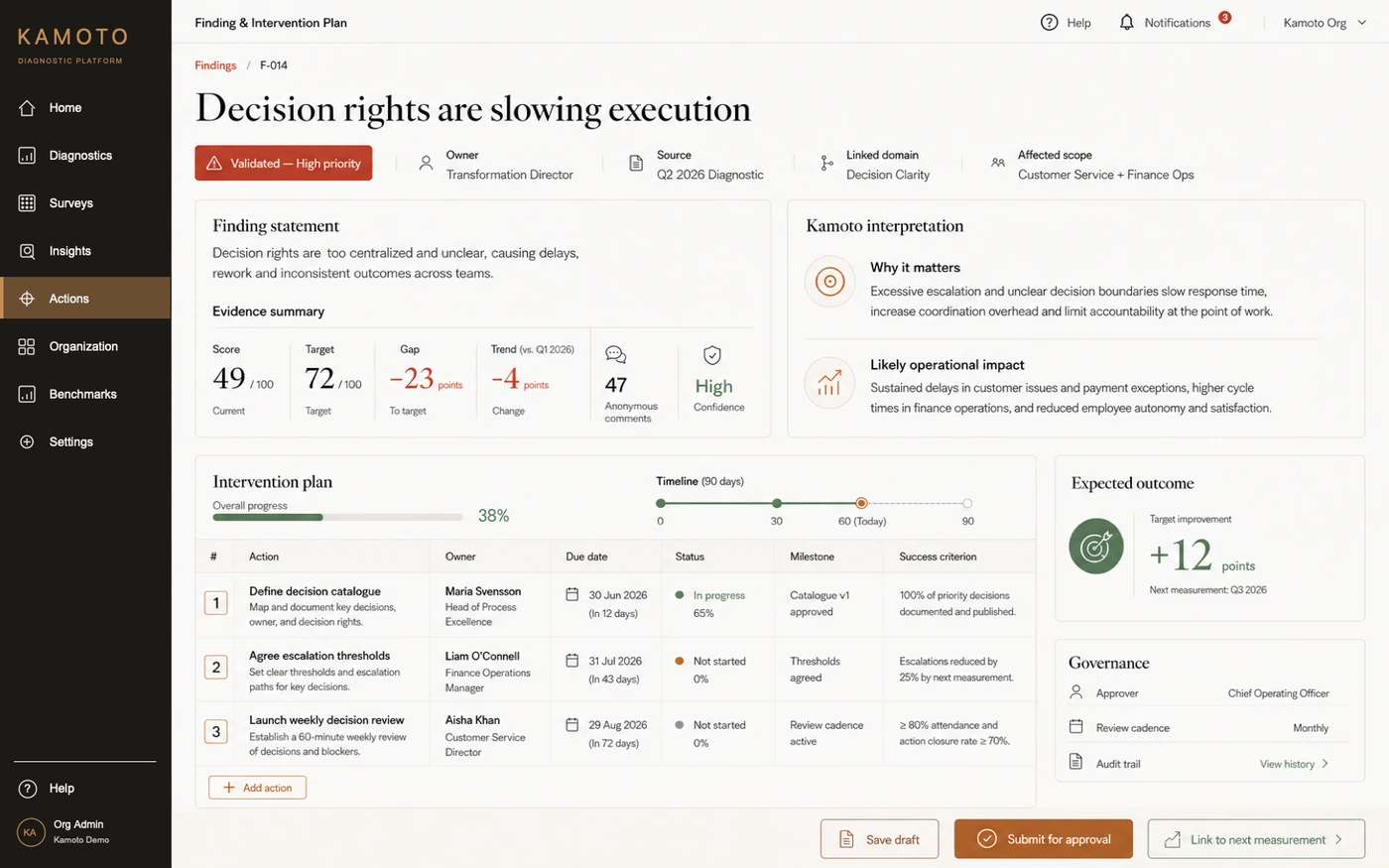
No orphan findings. No action plan that quietly disappears into SharePoint.
04 — Proof
The action was completed.
Did anything actually improve?
The new process was announced. The workshop happened. Every action in the tracker is green. People are still waiting three days for the same decision.
Completion tells us that activity happened. Remeasurement tells us whether the operating pattern changed.
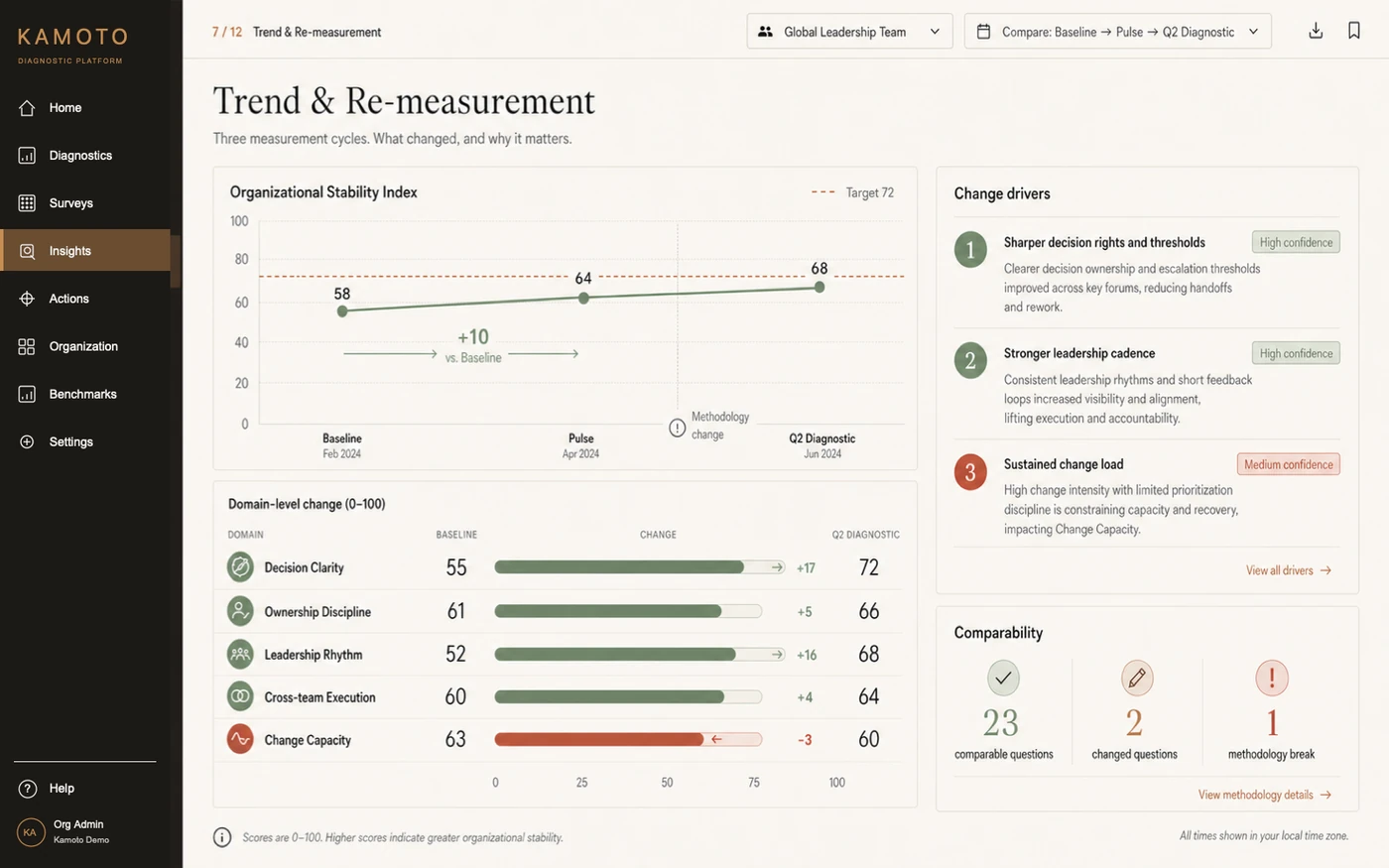
A completed action is not proof. Easier work is.
05 — Ways to work with Kamoto
The same diagnostic.
The level of support that fits your company.
Choose how closely you want us involved and how much capability already exists inside your organization.
Kamoto-led Diagnostic
You want us closely involved. We lead the diagnostic, interpret the findings with leadership and turn them into focused action.
- Setup and launch
- Diagnostic workshops
- Findings and intervention plan
Diagnostic Licence
You have the internal capability to lead it. Your team runs the process using the Kamoto platform and methodology, with support from us.
- Platform and methodology
- Facilitator training
- Advisory and remeasurement tools
Enterprise Diagnostic System
You need one approach across a larger organization. A scalable diagnostic system for multiple business units, countries or recurring cycles.
- Multi-unit deployment
- Benchmarks and comparisons
- Governance and enterprise support